
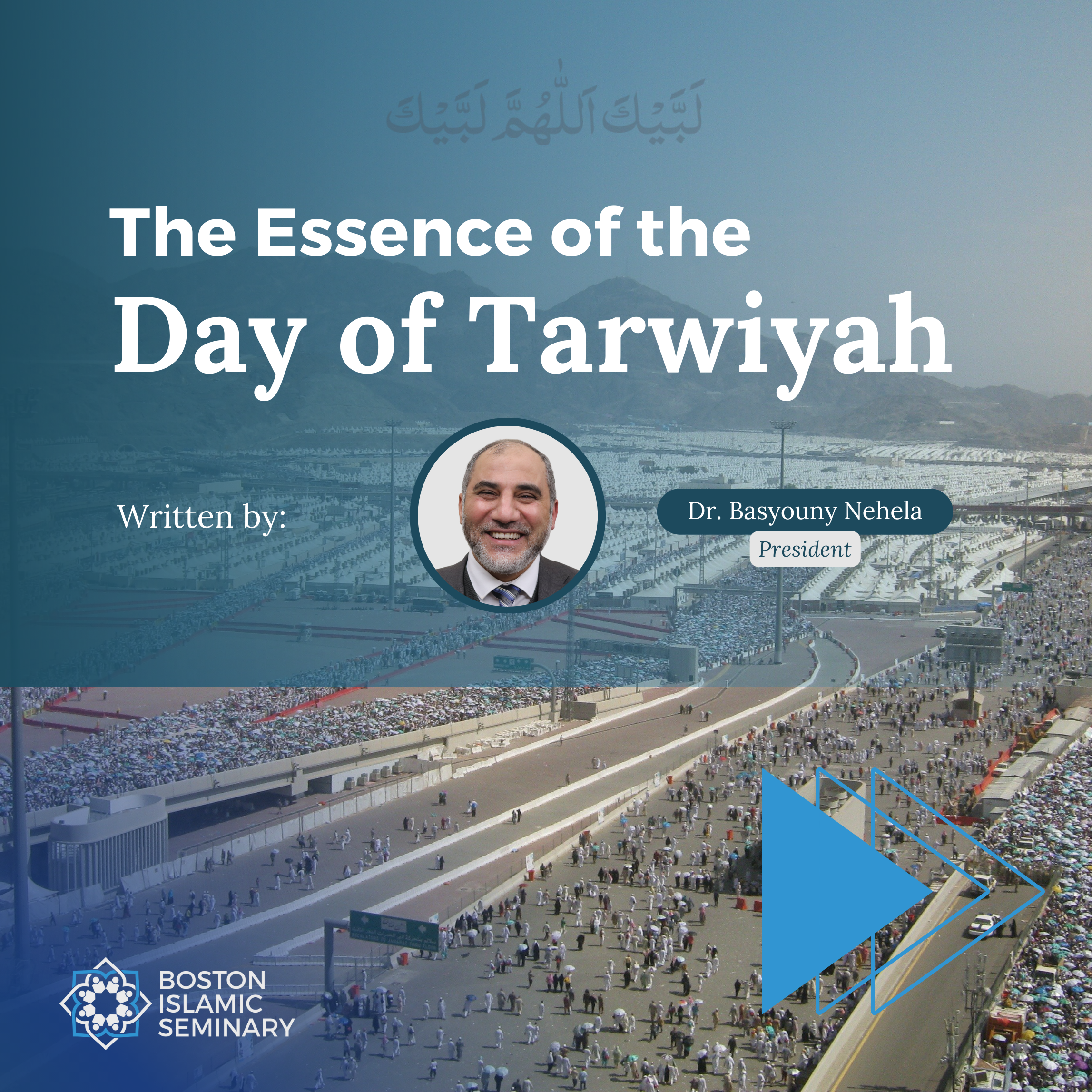
وَيَذْكُرُوا۟ ٱسْمَ ٱللَّهِ فِىٓ أَيَّامٍۢ مَّعْلُومَـٰتٍ
“and pronounce the Name of Allah on appointed days” (22:28)
As-salamu `Alaykuim Wa Rahmatu Allah,
Dear brothers and sisters,
Today is the eighth day of Dhul-Hijjah, known as the Day of Tarwiyah, which holds special significance in the Hajj pilgrimage. Today, the pilgrims start their journey by going to Mina while reciting the Talbiyah frequently!

The term “Tarwiyah” has multiple meanings, which are worth reflecting upon and incorporating into our lives, even if we are not performing the Hajj pilgrimage.
Here are the meanings associated with the Day of Tarwiyah and how we can practice them today:
1. Rewaya (Narration/Teaching): On this day, the leaders, imams, and scholars teach and narrate the rituals of Hajj to the pilgrims, preparing them for the upcoming days. Today, we can embrace this practice by learning and teaching the rituals of Hajj to one another. We can study the proper way to perform Hajj and share this knowledge with our friends, family, and community members, thereby increasing our understanding and appreciation of this sacred act of worship.
2. Altarawwy (Spiritual Preparation): The Day of Tarwiyah is also associated with taking quiet time for spiritual preparation for the next day. This can be practiced by setting aside some time for self-reflection, seeking forgiveness, and making sincere supplications. It is an opportunity to introspect, assess our spiritual state, and renew our intentions and devotion. We can use this time to prepare a list of supplications (duaas) to be made on the Day of Arafah, seeking Allah’s mercy, forgiveness, and blessings.
3. الري Alrei (Providing Water): Another meaning associated with Tarwiyah is the act of giving water to others and saving water for a long journey. Although originally referring to the practices during the Hajj journey, we can apply this concept by engaging in acts of charity and giving before the Day of Arafah. By supporting those in need and assisting others, we emulate the spirit of generosity and compassion exemplified during the Hajj pilgrimage. Giving charity, whether in the form of monetary donations, helping those in need, or supporting charitable causes, can be a way of expressing gratitude to Allah and preparing ourselves for a day of supplication and seeking His blessings.

Incorporating these meanings and practices associated with the Day of Tarwiyah into our lives allows us to connect with the spirit of Hajj and derive spiritual benefits even if we are not physically present in the pilgrimage.
May Allah accept our efforts and grant us blessings and guidance.
Dr. Basyouny Nehela
President
Boston Islamic Seminary

Sponsor an aspiring Muslim leader by donating to our Launchgood Campaign, which is dedicated to raising funds for student scholarships to create a profound and enduring impact on the lives of generations to come!