
The Master in Islamic Religious Leadership (MIRL) is a professional graduate degree that prepares Muslim religious leaders for compassionate, ethical, and effective service in the United States.
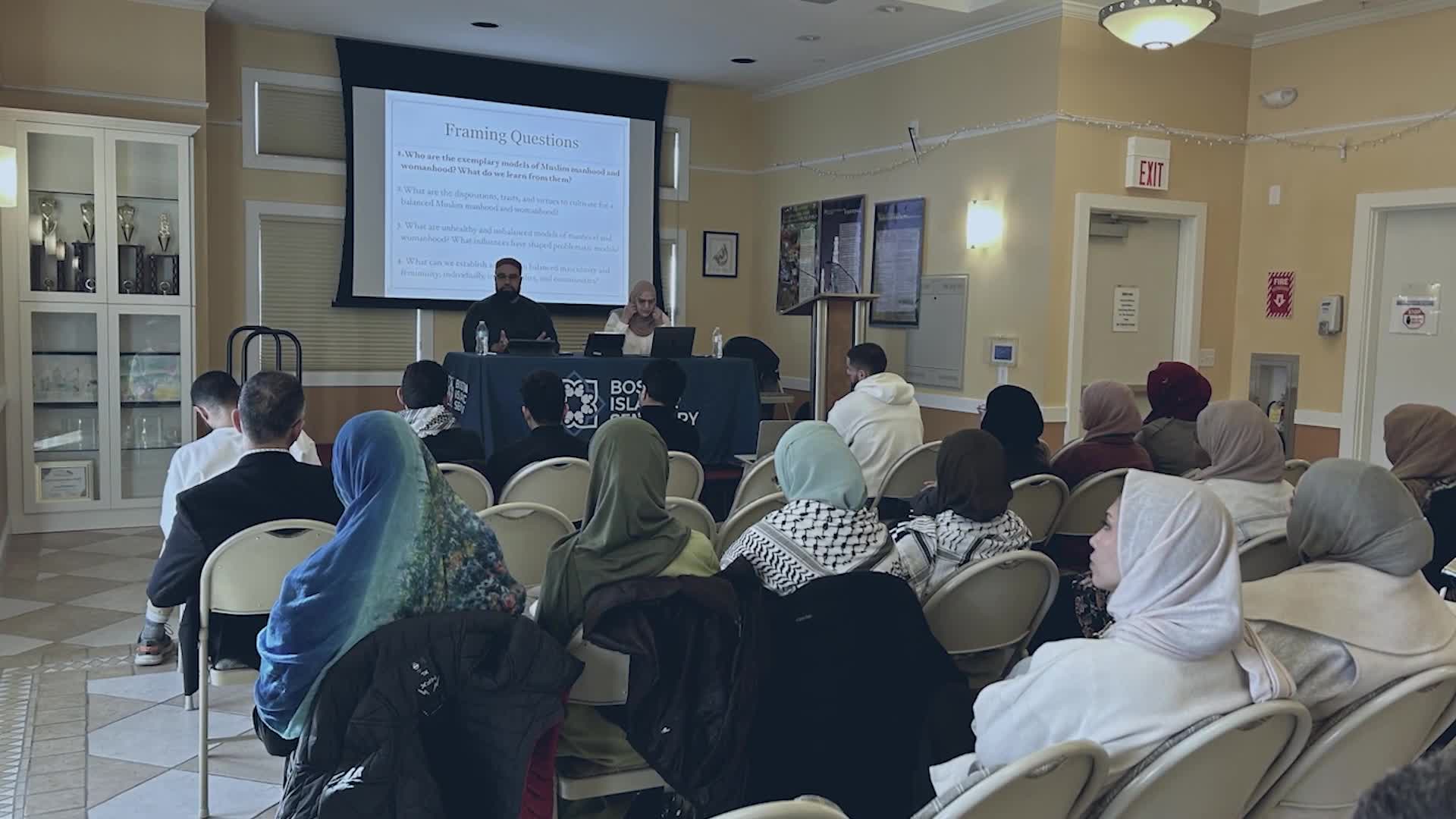
A short introduction to the program’s purpose, educational approach, and preparation for service. Includes classroom and retreat footage from the BIS institutional archive.
The Boston Islamic Seminary has been approved to grant a master’s degree in Islamic religious leadership. It is where today’s Muslim religious leaders prepare to carry out the mission of Islam while confronting challenges facing our society in America. A unique interdisciplinary program that focuses on the Islamic tradition, sciences and systems that influence Western civilization. And what is needed for our religious leaders to step up and address them with principled and reasoned Islamic solutions. The Boston Islamic Seminary invites you to enroll in the MIRL program. A graduate program that answers the call of our American Muslim community to equip you to be the best of leaders.
On-screen program information: 102 credits: 90 core credits, 10 internship credits, and a two-credit Capstone Writing Project. The educational approach integrates sacred texts, contemporary context, spiritual development, and practical leadership. The normal full-time plan is three years; part-time study follows a longer plan with Academic Advising. The closing invitation is to explore MIRL and speak with Admissions.
90 credits of core coursework plus 12 credits of field education and integrative work.
Part-time study follows a longer pathway planned with Academic Advising.
9+ additional credits; at least 111 total credits. Additional academic requirements apply.
The Master in Islamic Religious Leadership prepares exemplary and professional Muslim American religious leaders for compassionate service to society.
The program brings Islamic scholarship into conversation with contemporary American life. Sacred texts, contemporary context, spiritual and ethical formation, and practical leadership are integrated throughout the student experience.
Explore learning outcomes, the curriculum structure, and graduation requirements.
Review the suggested course sequence and discuss your progression with an adviser.
MIRL is intended for people seeking advanced preparation for Muslim religious leadership and service, including:
Current and aspiring religious leaders seeking deeper scholarship, contextual understanding, and professional preparation.
Teachers, mentors, and family-service leaders seeking to connect Islamic learning with the needs of their communities.
Leaders and pastoral-care providers seeking stronger judgment, communication, and practical leadership skills.
Applicants should be ready for rigorous graduate study, engagement with primary Islamic sources, research and writing, collaborative learning, and spiritual and ethical development. Review eligibility and transfer admission.
Graduates may pursue service in different settings according to their experience, qualifications, and any additional professional requirements:
Imam and mosque leadership, Islamic-center leadership, religious education, and daʿwah.
Youth and family ministry, community outreach, communications, and interfaith or civic engagement.
Chaplaincy, spiritual and pastoral care, community guidance, and nonprofit or institutional leadership.
The degree does not guarantee employment, endorsement, certification, ordination, or licensure. Specialized or regulated roles—including chaplaincy and counseling—may require additional training or approval from the relevant employer, professional body, or licensing authority.
Use the admissions pages for the current entry terms, application requirements, and deadlines. Consult Tuition & Scholarships for charges and financial-assistance policies.
Questions? Request MIRL information or contact mirl@bostonislamicseminary.org.
Learn more about BIS’s vision, mission, and values, Faculty & Scholars, and degree authorization and accreditation status.